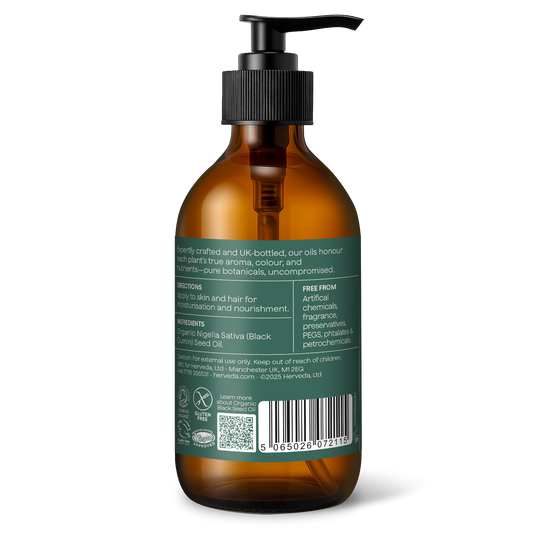
For centuries, Black Seed Oil has been cherished across cultures for its nourishing and healing properties. Now, in the modern era of clean, natural beauty and mindful self-care, this ancient botanical gem is enjoying a renaissance — and for good reason.
Today its popularity is rising not just among holistic wellness circles, but in mainstream skincare and haircare communities too. From social feeds to beauty routines, Black Seed Oil is appearing more and more in conversations about balance, nourishment, and real results.
A Heritage Rooted in Tradition
Black Seed Oil comes from the seeds of Nigella sativa, a plant historically grown in the Middle East and South Asia and parts of the Mediterranean. Its use dates back millennia — in ancient Egypt, Greece, and traditional Indian Ayurvedic practice — where it was valued for supporting the body’s natural resilience and vitality.
Often referred to as the oil of blessing or “Habbatus Sauda” in Arabic tradition, Black Seed Oil was traditionally used to support skin comfort, digestion, and overall wellbeing. Today, science and consumer curiosity are aligning around its benefits, bringing this heritage ingredient into the beauty spotlight.
Why Black Seed Oil Is Trending Now
So why is Black Seed Oil suddenly gaining traction in 2025?
-
Clean Beauty Momentum: Consumers are moving away from synthetic solutions and seeking plant-powered, biologically familiar ingredients.
-
Holistic Self-Care: Black Seed Oil aligns with the natural self-care movement — it’s not just about how you look but how you feel.
-
Ingredient Transparency: Shoppers are educated; they want to know what’s inside and why it matters — and Black Seed Oil delivers notable fatty acids, antioxidants, and soothing compounds.
-
Social Sharing & Education: Influencers and skincare guides are celebrating its versatility, from calming skin to supporting hair strength, making it a trend beyond just hype.
What Makes Black Seed Oil Special
Black Seed Oil is unique because of the powerful nutrients it naturally contains:
-
Thymoquinone: A signature compound that helps support skin comfort and a balanced look
-
Omega Fatty Acids (Omega-6, Omega-9): Support hydration and skin elasticity
-
Antioxidants: Help defend against environmental stressors
-
Vitamins & Phytochemicals: Contribute to overall skin and scalp nourishment
This blend of compounds gives Black Seed Oil a balanced versatility — capable of supporting a range of skin types and hair concerns without heaviness or greasiness.
Benefits for Skin
Black Seed Oil has become a favourite in skincare for several reasons:
-
Soothes & Calms: Helps skin feel more comfortable and balanced
-
Supports Hydration: Locks in moisture with a lightweight glide
-
Antioxidant Support: Helps skin appear resilient and protected
-
Suitable for Many Skin Types: Works well for sensitive, combination, or balanced routines
It’s often used as:
-
A face oil layered before or after moisturiser
-
A targeted booster in serums and oils blends
-
A night ritual oil for deeper comfort
Benefits for Hair
For hair, Black Seed Oil is trending as a natural support for strength and vitality:
-
Scalp Nourishment: Helps create a balanced scalp environment
-
Hair Strength: Omega fatty acids help support resilient strands
-
Lightweight & Non-Greasy: Conditions without heaviness
-
Shine & Softness: Leaves hair feeling soft and full of life
Whether applied to the scalp or hair lengths, it’s a versatile ritual additive — great on its own or mixed with other oils.
How to Use Black Seed Oil in Your Ritual
Skin:
After cleansing, warm a few drops between your palms and gently press into slightly damp skin. Follow with moisturiser if needed. Great morning and night.
Hair:
Massage a few drops into the scalp or along dry lengths. Leave for 30 minutes or overnight before rinsing for deeper nourishment.
Nails & Cuticles:
Apply daily for softer cuticles and conditioned nail beds.
Layering:
Mix with light facial oils (like Abyssinian or Jojoba) for personalised balance.
Pairing with Other Botanicals
Black Seed Oil works beautifully in synergy:
-
With Abyssinian Oil for added slip and lightweight moisture
-
With Jojoba for sebum-like balance
-
With Rosehip or Tamanu for enhanced skin regeneration support
Why We’re Excited at Herveda
At Herveda, we’re passionate about ingredients with legacy and performance. Black Seed Oil is one of those treasures: historic, versatile, and increasingly relevant for modern beauty rituals.
Just like Abyssinian Oil, it’s an example of a botanical that doesn’t just trend — it performs.
We’re excited to bring you formulations and rituals that help you explore this oil in thoughtful, effective ways.
Key Takeaways
-
Ancient & Trending: A historic botanical gaining modern beauty traction
-
Nutrient-Rich: Packed with antioxidants, omegas, and thymoquinone
-
Skin Support: Hydrates, soothes, and supports balanced skin
-
Hair Nourishment: Conditions scalp and strengthens strands
-
Versatile Ritual Oil: Works across skin, hair, and nails
Frequently Asked Questions (FAQ)
1. Is Black Seed Oil safe for sensitive skin?
Yes — its lightweight nature and antioxidant profile make it suitable for many skin types, including sensitive. Always patch test.
2. Can I use it daily?
Absolutely — applied sparingly, Black Seed Oil supports daily skin and scalp nourishment.
3. How is it different from Jojoba or Abyssinian Oil?
Black Seed Oil has distinct compounds (like thymoquinone) that support calming and antioxidant balance, while Jojoba and Abyssinian focus on texture, slip, and sebum-mimicking hydration.
4. Does it help with hair growth?
It supports a healthy scalp environment, which is part of the foundation for stronger, more resilient hair. Individual results vary.
5. Can it be mixed with other oils?
Yes! It blends beautifully with carrier oils like Jojoba, Abyssinian, Rosehip, and Argan.
© 2025 Herveda. All rights reserved. Products sold on this website are not intended to diagnose, treat, cure, or prevent any disease. If you are pregnant, breastfeeding, taking medication or under medical supervision, consult a healthcare professional before use. All information provided is for educational purposes and is not a substitute for professional medical advice.